Filter by:
| description |
|---|
11.01.2015 | Faculty Planning and Curricular Coherence | Report
People, Tools, and Processes that Build Collaborative CapacityThis white paper offers conceptual and practical tools to help collaborators and their collaborations succeed. Our goal is to provide practitioners, administrators, assessment professionals, and organizational partners with an integrated framework to help identify and align the people, tools, and processes necessary for collaborative efforts. |
10.13.2015 | Faculty Work & Student Learning in the 21st Century | Books & Monographs
Faculty Leadership for Integrative Liberal LearningThe publication aims to elucidate the value and use of integrative liberal learning and the best pedagogical and faculty leadership practices to prepare students for applying their learning to complex challenges in life, career, and citizenship. |
09.30.2015 | Faculty Work & Student Learning in the 21st Century | Journal Article
Metacognitive Strategies in the Introduction to Political Science ClassroomBy assessing changes in student learning, the article investigates, identifies and isolates specific and transferable classroom interventions for improving student learning and proposes using metacognitive-based teaching strategies in a political science classroom. |
09.08.2015 | Faculty Work & Student Learning in the 21st Century | Journal Article
From Polyps to Politics: Using a Coral Reef Living Laboratory in a Politics of Sustainability CourseTo address these challenges and improve student learning, a faculty-student team integrated a coral reef living laboratory into a Politics of Sustainability course which focuses on Global Environmental Politics. This article provides empirical evidence of improved student learning outcomes by using pre/post assessment tools, student surveys, and faculty journals. |
09.01.2015 | Faculty Work & Student Learning in the 21st Century | Journal Article
Everything I Know About Teaching I Learned From JazzThe processes of learning and creating jazz provide a way to illustrate new teaching methods that allow students to discover new knowledge through their own creative interests and to develop self-efficacy with the material. |
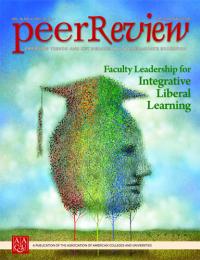
09.01.2015 | Faculty Work & Student Learning in the 21st Century | Journal Article
Peer Review: Faculty Leadership for Integrative Liberal LearningThis issue of Peer Review, sponsored by the Teagle and Mellon foundations, offers insights about the central role of faculty in galvanizing the necessary experiences that cross disciplines, units, and campus boundaries to promote integrative learning. |
07.01.2015 | Special Projects | Journal Article
Behavioral Ethics and Teaching Ethical Decision MakingBusiness education often renders students less likely to act ethically. An infusion of liberal learning in the form of behavioral ethics could improve this situation by prompting students to develop higher levels of professionalism that encompass ethics, social responsibility, self-critical reflection, and personal accountability. |
06.01.2015 | A Larger Vision for Student Learning: Education for Civic and Moral Responsibility | Journal Article
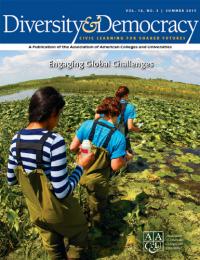
More than Bells without Clappers: Students Finding Voice through Civic Engagement with Big QuestionsWith the national conversation about college emphasizing timely degree completion and readiness for employment, how can community college educators prepare our students to tackle the big questions they currently experience and will further confront in the complex, changing environment of our interconnected global future? |

06.01.2015 | Hybrid Learning and the Residential Liberal Arts Experience | Guide
2015 LVAIC Technology CookbookThe Lehigh Valley Association of Independent Colleges (LVAIC) developed a “technology cookbook” to provide faculty members with “recipes” on incorporating digital tools in their classroom. |
05.01.2015 | Faculty Planning and Curricular Coherence | Report
Improving Teaching, Learning, and Assessment by Making Evidence of Achievement TransparentAuthentic student achievements that are addressed to a real world audience can lead to richly detailed portfolios of work that add value to degrees and the granting institutions. A guide is provided for implementation of new high-impact practices, including structured assignment creation. |